



- Ankita Dogra
- 16-06-2026
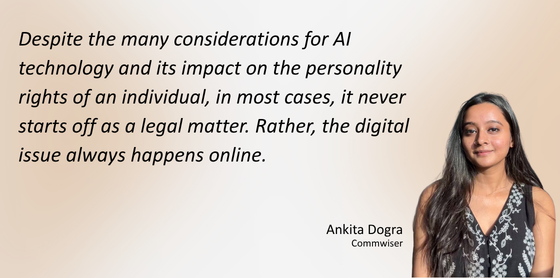
Despite the many considerations for AI technology and its impact on the personality rights of an individual, in most cases, it never starts off as a legal matter. Rather, the digital issue always happens online.
The viral video or a fake endorsement can take over social media within seconds. Once the legal process starts taking place and when it reaches court, the damage may already be done. The screenshots will have been circulated; the story will have already been developed and people’s opinions will already have been formed and changed.
When it comes to influencers and celebrities, their business relies heavily on their reputation and credibility, and any negative impact they might incur through any of this could prove to be very costly for them. For a brand that invests a great deal in their influencer campaign, there will also be some negative repercussions, eventually leading to consumer backlash and even damaging partnerships.
But there’s a quieter disruption happening at the very top of the client’s journey, and it’s moving fast
Creator Economy Requires More Than Legal Protections
As influencer marketing matures into business operations and personal brands develop commercial value, identity needs to be protected through a more comprehensive strategy. Once creator brands are formed, protecting their reputation and image will be just as vital as legal protection.
Legality still counts. Contract agreements, licensing deals, endorsements, and personality rights are all essential aspects of identifying ownership and dealing with abuse.
Nevertheless, legal solutions will not mend broken bridges. Creators and their brands are now required to focus on their reputation, crisis response plans, and communication tactics in addition to their legal rights. In this case, the problem is not only a legal one anymore but also a credibility issue.
The Intersection of Law, Reputation and Influencer Marketing
The rapid rise of influencer marketing has drastically altered the partnership dynamics between brands and creators. No longer is it just about endorsements; these partnerships require trust, reliability and authenticity.
Identity has become a commercial asset because of this. In turn, a deepfake created by an influencer can mean much more than that to just that influencer; it may impact their marketing campaigns, their brand partnerships and the business interests of companies who use the creators to connect to consumers. In other words, when the identity becomes business, then the abuse of the identity becomes a business risk.
Consequently, protecting one’s digital identity has now become a multidisciplinary task.
The Intersection of Law & Reputation
With AI complicating the boundary between truth and fiction, identity protection is now both a legal as well as an issue of trust, reputation, and communications. Since deep fakes, fabricated endorsements, and tampered material can spread around the world in mere minutes, the public opinion may already be shaped long before any legal action could be taken. By the time legal action has been initiated, opinions may already have formed, false information disseminated widely on various channels, and even reputation harmed.
For creators, celebrities, and brands, the problem does not only concern exercising their legal right. It is about maintaining credibility in an environment where trust plays a crucial role in forming a relationship between audience and creators/brands. It is important not just to expose the false information but also to maintain confidence and trust.
Here, legal and strategic communication approaches go hand in hand. From handling media narratives to predicting reputational risk and dealing with misinformation campaigns, a combination of different approaches can help manage the situation more effectively.
In cases when the creators use themselves as an influential marketing tool or invest heavily into influencer marketing, protecting their reputation becomes at least as important as protecting their legal rights.
After all, in such environments reputation and trust are key elements of the business relationship between the influencer and a brand. The next big conflict in the creator economy will likely revolve around an artificial intelligence rather than an actual issue related to contractual agreements or misleading advertisements.
- What if someone used an AI to create an endorsement without your knowledge?
- What if they used a cloned voice to promote a product?
- Or what if they managed to create a video that causes reputational damage?
As technology and creator economy continue to grow, we’ll need more than a legal strategy in place. We will have to use a combination of law, reputation protection and strategic communication. Because digital fame is an asset that should be protected.